
 Support
 Contact us
 English


 Back to lobby

Leon PaullSenior Business Development Manager, iMDsoft Dec 16, 2025
Last month I walked the halls of Medica 2025, one of the largest medical tech shows in the world. Other than sore feet I came away with a few insights into where healthtech is headed in the next few years and how MetaVision fits into this rapidly evolving industry. Very little changes rapidly in healthcare, especially when it comes to adoption of new technologies, however I couldn’t help but get the sense that we are on the brink of dramatic changes in healthcare technology that will reshape the delivery of care.

Here is a recap of some of the more noticeable trends and insights I was able to take from the show:
-
Home & virtual healthcare
Home and virtual healthcare is very much in focus. Facilitated by developments in wearables, smart sensors, apps and solutions for transmitting data from patients at home to clinicians, virtual wards and home hospitals are clearly a priority for health systems such as the NHS. Innovation executives explained how home and virtual hospital care will help alleviate some of the bottlenecks and inefficiencies that impact the NHS, whilst in Saudi Arabia entire virtual hospitals are being created as part of the Saudi 2030 plan.
-
Remote monitoring and telemedicine
Closely related to the shift of care to home settings, remote monitoring and telemedicine solutions were in abundance. Most of the many patient monitoring solutions at the show now include a remote monitoring capability including mobile access to patient data. The implications for critical care are significant. As ICUs digitize the ability to extend specialist expertise across sites and support off-hours coverage improve the availability and quality of critical care.
-
Personalized precision medicine.
Another notable theme was how connected digital tools combined with genomics, nanotech, robotics and AI are increasingly enabling the shift from standardized protocols to personalized and highly precise ones. One example of this is personalized ventilation in neonates enabled by real time synthesized analysis of breathing, heart rhythms, waveforms and muscle movements.
-
AI is integrating into workflows.
As the accuracy of medical AI models improve and hospitals hire AI engineers the integration of AI into clinical workflows is accelerating fast. This was apparent in the multitude of AI applications on display at the show. However, the majority of solutions are targeting primary and home care. Some AI solutions were showcasing acute care use-cases, for example Ambient speech recognition for clinical documentation, however, it appears that these are still early days for AI adoption in intensive care.
-
Where is it all going – the future of healthcare.
A common message from many of the keynote speakers, such as Dr Daniel Kraft, is that healthcare is moving toward a more intelligent, digital, data-driven, connected, and preventative paradigm. In this vision data is collected continuously from multiple devices and sensors, enabling earlier identification of deterioration regardless of where the care is delivered. More predictive, personalised treatment pathways couple with democratized access to clinical expertise to improve the quality and outcomes of healthcare. The real accelerator of this shift is the convergence of technologies. AI, wearables, smart sensors, genomics, telemedicine, imaging, robotics and cloud infrastructures are beginning to interlock. As they do new care models emerge to deliver on a promise of more pro-active, personalized and accurate care to patients across all care settings.
-
What does this all mean for MetaVision and how it enhances critical care?
Medica 2025 highlighted not only where the industry is headed, but also where there are unmet needs in acute and critical care.
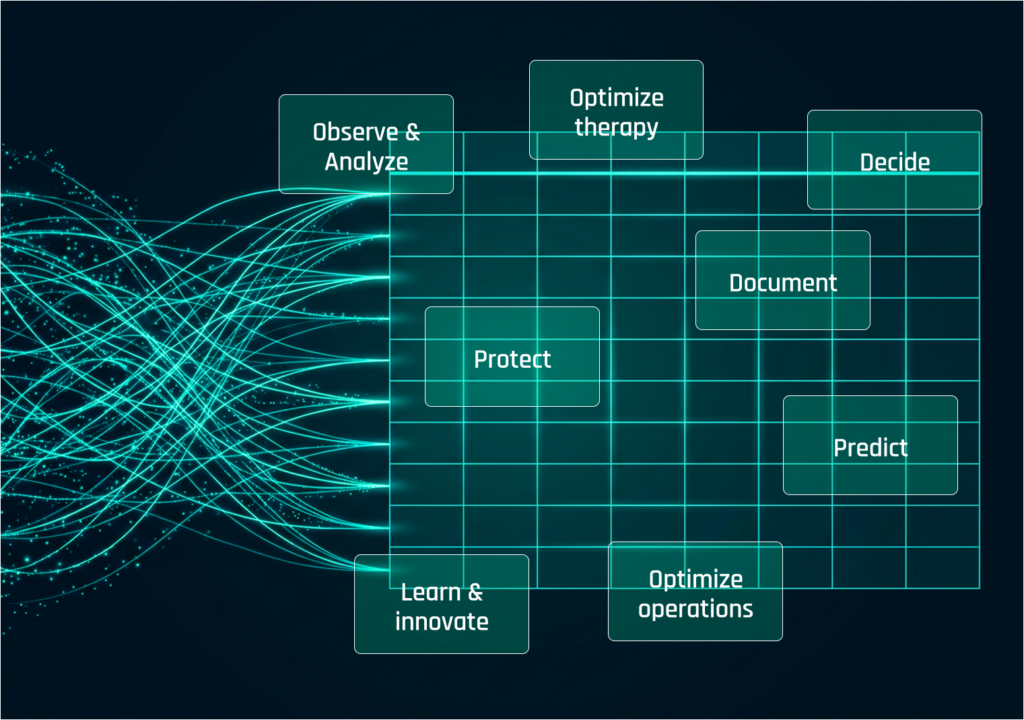
ICUs need a platform that integrates device data, documentation and analytics. MetaVision serves as this essential platform, a hub for intelligence in the ICU that elevates clinical performance by going beyond mere documentation to enable intelligence enhanced workflows.
As virtual wards expand, and care becomes multimodal, utilizing a variety of converging technologies, the need for acute and critical care grade data will follow across settings and evolve. As this rapidly shifting technological landscape makes it way into the ICU, MetaVision will continue to evolve to meet and support the shifting needs of clinicians.


Leon Paull Senior Business Development Manager, iMDsoft Leon Paull is a Senior Business Development Manager. With over 20 years of business growth experience, Leon is spearheading the expansion of iMDsoft’s global channel partner network and taking iMDsoft into new markets around the world.
 Book a demo


 Login to Support Portal
